
AI is Redefining How Search Works
Search is undergoing a seismic transformation. Where traditional search engines once crawled and indexed pages to match keywords with user queries, today’s AI-powered systems like ChatGPT, Gemini (formerly Bard), Claude, and digital assistants such as Siri and Alexa are reshaping search by relying on structured, verified data instead of random website text.
At the core of this shift are knowledge graphs – massive structured databases of entities, facts, and relationships that enable AI to interpret real-world context and deliver precise answers rather than generic lists of links. This evolution is part of semantic search, where meaning and intent drive results, not just keywords.
What is a Knowledge Graph?
A Knowledge Graph is a structured database that stores information about entities – such as people, brands, businesses, concepts, and their relationships to one another. Google’s Knowledge Graph, launched in 2012, organizes billions of facts across millions of entities, improving search accuracy, relevance, and user experience.
For example, searching “Apple” prompts Google’s Knowledge Graph to distinguish whether you’re referring to the fruit, the technology company, or another entity entirely by analyzing structured data connections.
Knowledge Graph vs Knowledge Panel
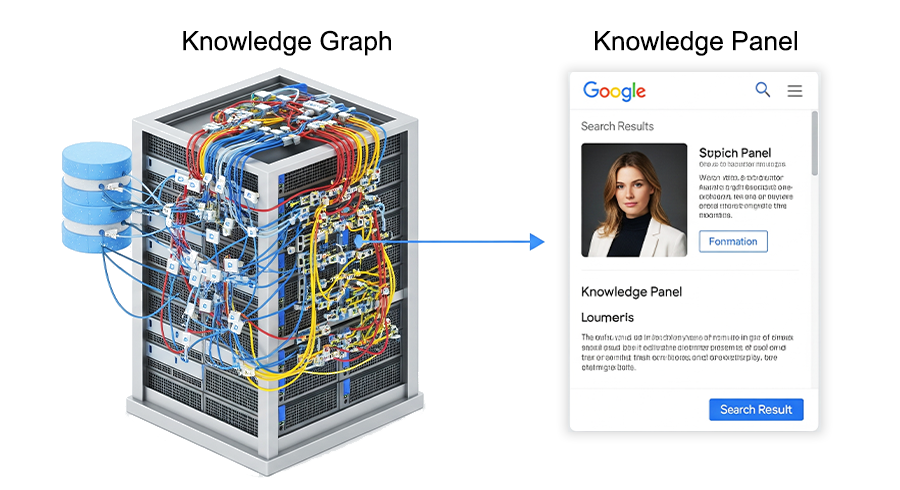
- Knowledge Graph
Google’s internal database containing structured facts about entities and their interconnections. It powers services like Search, Maps, Google Assistant, and AI models by providing verified, contextual data. - Knowledge Panel:
The visible information box shown in Google Search results when an entity is recognized. It displays summarized, verified data pulled from the Knowledge Graph, such as a business description, leadership team, social media profiles, and contact information.
Why Knowledge Graphs Matter in the Age of AI
AI models increasingly pull information directly from verified structured data sources like Knowledge Graphs, Wikipedia, Wikidata, and Schema Markup, rather than crawling unverified website text. This ensures:
- Accuracy and consistency of facts
- Protection against misinformation
- Rich, contextual understanding of entities
- Faster delivery of concise, structured answers
For brands, professionals, and businesses, this means:
- Enhanced Search Visibility
Knowledge Panels improve credibility and increase click-through rates by presenting official-looking, structured information to users. - Established Authority and Trust
Google verifies entities before displaying Knowledge Panels, reinforcing brand legitimacy, authority, and expertise in your niche. - AI Assistant Integration
Digital assistants and AI search models rely on knowledge graphs for verified information, expanding your reach into voice search and conversational AI experiences. - Future-Proof SEO
Structured data is the backbone of AI-first search, ensuring your content remains relevant and discoverable as search becomes more semantic and entity-driven. - Brand Protection and Consistency
Knowledge Graph optimization ensures your business information is controlled, accurate, and consistent across all platforms and AI outputs. - Competitive Advantage in AI-Driven Search
Brands and professionals without structured data risk digital invisibility, while those investing in it are rewarded with higher search prominence, richer results, and AI-friendly brand profiles.
How is a Knowledge Graph Built?
You cannot directly create a Knowledge Panel. Google awards it based on consistent, credible online presence. Panels are earned by establishing verifiable identity and authority across multiple trusted sources.
A Knowledge Graph entry aggregates structured data from:
- Official websites with Schema Markup correctly defining organizations, people, products, services, and other entities clearly.
- Social media profiles linked to websites, showcasing consistent branding, descriptions, and verified ownership.
- Wikipedia and Wikidata entries, which are primary trusted sources feeding Google’s Knowledge Graph database.
- Authoritative directories such as Crunchbase (businesses), AngelList (startups), MusicBrainz (musicians), Healthgrades (medical professionals), and niche-specific databases.
- Press coverage and news articles establishing the brand or individual’s notability.
- Google My Business profiles for local businesses, feeding verified location, service, and contact data into search.
Why Schema Markup is Foundational
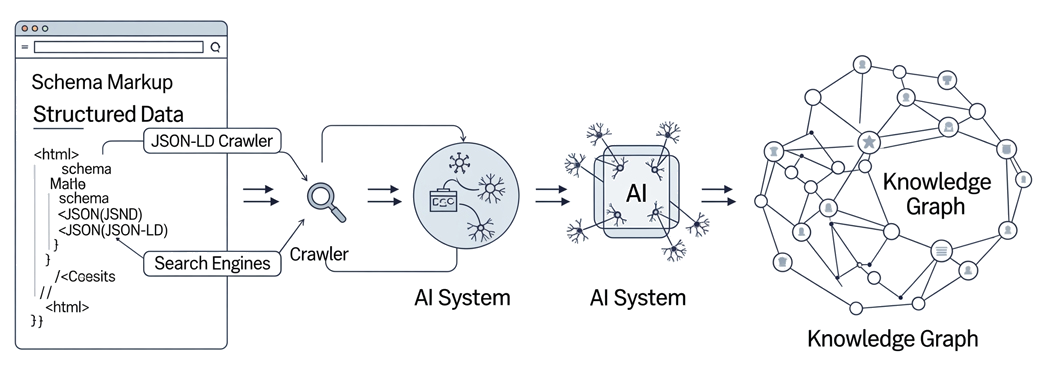
Schema Markup, implemented in JSON-LD format recommended by Google, is structured data code added to websites that clarifies the meaning of content for search engines and AI systems, supporting accurate Knowledge Graph inclusion.
Knowledge Graph Optimization: Best Practices
Leading digital strategy firms like TruBrand Marketing now offer comprehensive Knowledge Graph Optimization Services, which include:
- Brand Account Setup
Creating and linking Google Brand Accounts, YouTube channels, and entity profiles for verification and authority. - Social Media Optimization
Building and optimizing profiles across Facebook, LinkedIn, Instagram, Twitter/X, TikTok, and industry platforms, ensuring brand consistency and verified status. - Industry Listings Management
Establishing your presence in sector-specific directories like Crunchbase, AngelList, Healthgrades, MusicBrainz, Yelp, and TripAdvisor to strengthen structured data signals. - Wikipedia and Wikidata Support
Creating or enhancing entries to establish notability, structured data, and entity definitions trusted by AI systems. - Press Releases & Media Placement
Securing reputable media coverage and press mentions to build third-party credibility signals critical to Knowledge Graph recognition. - Schema Markup Implementation
Adding structured data across your website for organization details, people, services, products, reviews, FAQs, and events to enhance AI understanding. - Google Business Profile Optimization
For local businesses, optimizing your GBP ensures accurate Knowledge Panel data including hours, services, photos, and reviews. - Google Search Console Connection
Connecting your site to monitor indexing, structured data health, and performance insights for optimization. - Image Optimization
Implementing correct file naming, EXIF metadata, and alt text to support AI image recognition and Knowledge Graph associations.
Why This Matters for the Future of Search
AI Pulls from Structured, Verified Data – Not Random Websites
Traditional SEO, focused purely on keywords, is no longer sufficient. As AI search advances:
- ChatGPT, Gemini, and similar models reference structured data and knowledge graphs for trusted facts instead of general blog posts.
- Digital assistants prioritize verified entity data to answer voice and conversational queries with confidence.
- Search results are becoming answer-based, relying on structured databases to deliver concise, accurate results instead of endless links.
The Risk of Ignoring Structured Data
Brands without Knowledge Graph presence risk digital invisibility in AI-powered search environments. Investing in Knowledge Graph optimization future-proofs your brand, ensuring AI retrieves accurate, controlled information about your business or expertise.
Structured Data is the Future of SEO
- Knowledge Graph = Google’s structured database of facts
- Knowledge Panel = public display of entity information in search
- AI systems rely on Knowledge Graphs to deliver accurate answers
Optimizing for the Knowledge Graph is no longer optional. It is foundational for SEO authority, AI and assistant visibility, brand credibility, and long-term competitive relevance.
How TruBrand Marketing Empowers Brands for AI-First Search
TruBrand Marketing leads the way in AI-First Search Strategy and Knowledge Graph Optimization, offering comprehensive services designed to elevate your brand’s digital presence and authority in an AI-driven search landscape:
- Knowledge Graph Optimization
We build structured entity data and implement precise Schema Markup to boost your brand’s visibility and improve your chances of inclusion in Google’s Knowledge Panels. - Yext Knowledge Network Integration
By managing your business data across hundreds of authoritative directories, apps, and search engines, we ensure real-time updates for consistent, accurate, and trusted online presence. - Reputation and Content Authority Building
Our strategic press releases, targeted media placements, and authoritative backlink campaigns establish strong third-party credibility signals essential for Knowledge Graph influence. - Digital Asset Optimization
We enhance image metadata, file structures, and apply schema enhancements to improve AI understanding and increase visibility in image-based and visual search results. - Wikipedia and Wikidata Support
We help establish or refine your brand’s entries in these trusted knowledge repositories, feeding AI models and Google’s Knowledge Graph with verified, structured data. - AI-First SEO Strategies
Our approach transforms your digital strategy to ensure your brand remains visible, trusted, and competitive amid the growing shift toward AI-powered conversational and answer-based search results.
Through this full suite of services, TruBrand Marketing equips your brand to thrive in the evolving world of AI-powered search — enhancing your online authority, boosting visibility, and securing a sustainable competitive advantage for the future.
Ready to Lead in AI-First Search?
Search is evolving rapidly — is your brand ready? TruBrand Marketing helps you build a powerful Knowledge Graph presence, strengthen your AI search authority, and keep your business visible, trusted, and ahead of the competition as AI transforms how customers discover you.
Optimize your structured data for AI-powered search, earn and control your Knowledge Panel, and future-proof your SEO and brand authority — all with one trusted partner.